A Deep Transformation from ‘Chatting’ to ‘Doing’
This year, the government work report introduced the concept of creating a new smart economy, marking a significant shift in China’s AI development strategy from ’tool empowerment’ to ‘systemic transformation.’ At a critical juncture in the 14th Five-Year Plan, the smart economy is becoming a core engine for cultivating new productive forces and promoting high-quality development.
At a recent press conference, Chen Changsheng, a member of the drafting group of the government work report and deputy director of the State Council Research Office, illustrated the transition of AI from the ‘digital screen’ to the ‘real world’ with a personal anecdote about using AI to generate a New Year video for his parents. Experts point out that the smart economy, driven by AI, will reconstruct the entire process of production, distribution, exchange, and consumption, empowering both traditional and emerging industries. Chen Yanjiong, president of the Shanghai Industrial Digital Research Institute, summarized this as an industrialization process of ‘AI+’ characterized by five elements: ‘use, compute, cloud, network, and data.’
The government work report places the smart economy within the broader framework of ‘strengthening industrial momentum,’ alongside ‘upgrading traditional industries,’ ‘cultivating emerging industries,’ and ‘upgrading services,’ highlighting its strategic importance.
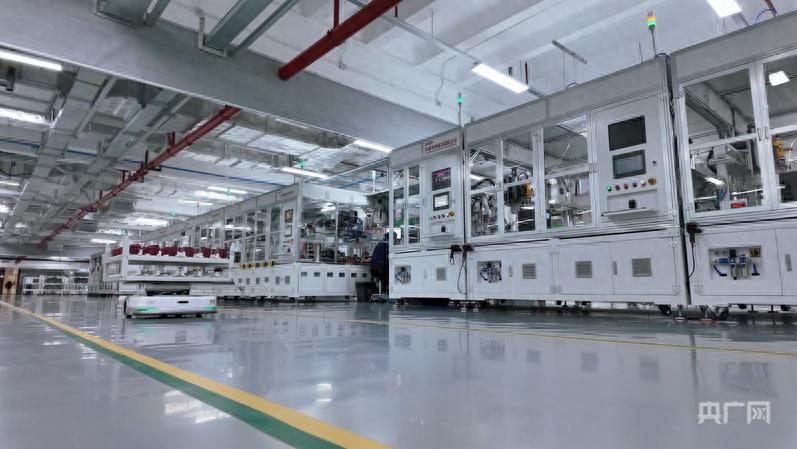
Data shows that China is well-positioned to develop its smart economy. By 2025, the core AI industry is expected to reach a scale of 1.2 trillion yuan, with over 6,200 companies, and the total computing power ranking second globally. The integration of industrial internet applications has covered all 41 major industrial categories, nurturing 504 outstanding smart factories.
From ‘Single Point Breakthrough’ to ‘Systemic Restructuring’
Creating a new smart economy is not about single breakthroughs by individual companies or technologies but involves a core focus on ‘data + computing power + algorithms.’ This approach promotes cross-domain integration of AI, advanced manufacturing, and new materials to achieve overall upgrades in the industrial chain, supply chain, and innovation chain. This transformation requires systematic capability upgrades for businesses and industries.
On April 10, the Ministry of Industry and Information Technology held a press conference on ‘Promoting High-Quality Development of National High-Tech Zones,’ clearly stating the goal to ‘comprehensively enhance the development level of the AI industry in national high-tech zones and accelerate the creation of a new smart economy.’ The focus is on three key enhancements: improving innovation capabilities, fostering competitive AI enterprises, and accelerating the deployment of intelligent computing facilities.
Shanghai is becoming a pioneer in this strategy. Officials from the Shanghai Municipal Economic and Information Commission stated that the city is fully implementing the ‘AI+’ initiative, targeting manufacturing, productive services, and AI-driven scientific research through tailored strategies to empower various industries. In knowledge-intensive sectors like finance, law, and accounting, Shanghai is exploring new models of ‘intelligent execution + expert decision-making’ to convert technological advantages into cost benefits.
Chen Yanjiong emphasized that while Shanghai has a comprehensive policy framework, more universal policy tools are needed to ensure that more small and medium-sized enterprises can access and afford these technologies.
From ‘Single Tool’ to ‘Universal Intelligence’ in Industry
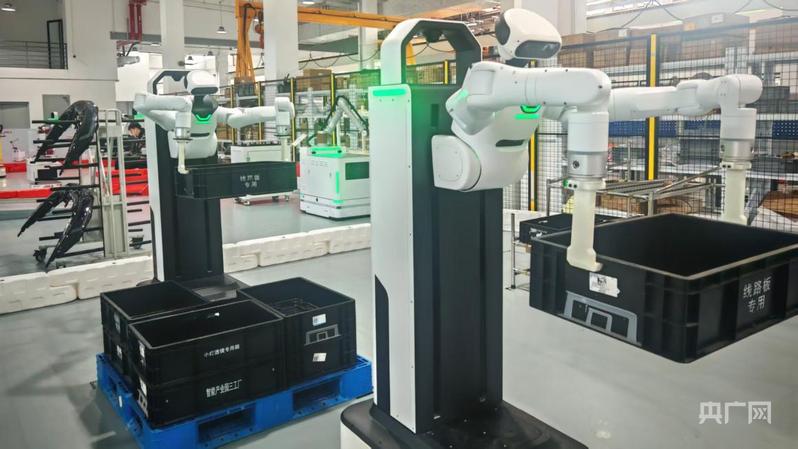
The vitality of the smart economy lies in its practical applications, with general-purpose intelligent robots serving as the core execution medium for transitioning from ‘chatting’ to ‘doing.’ Unlike traditional single-function robots, these robots can operate across various scenarios, learn autonomously, and adapt flexibly, integrating perception, decision-making, and execution. They are crucial hardware support for the realization of the smart economy.
The Shanghai-based Jieka Robot Company exemplifies this trend. Vice President Chang Li shared that by the second half of 2025, the company plans to complete a strategic upgrade from collaborative robots to general-purpose intelligent robots, establishing a three-tier system from intelligent hardware to smart brain platforms and scenario-based application ecosystems. ‘We aim to upgrade robots to possess generalized operational capabilities, achieving a leap from single tools to universal intelligence.’
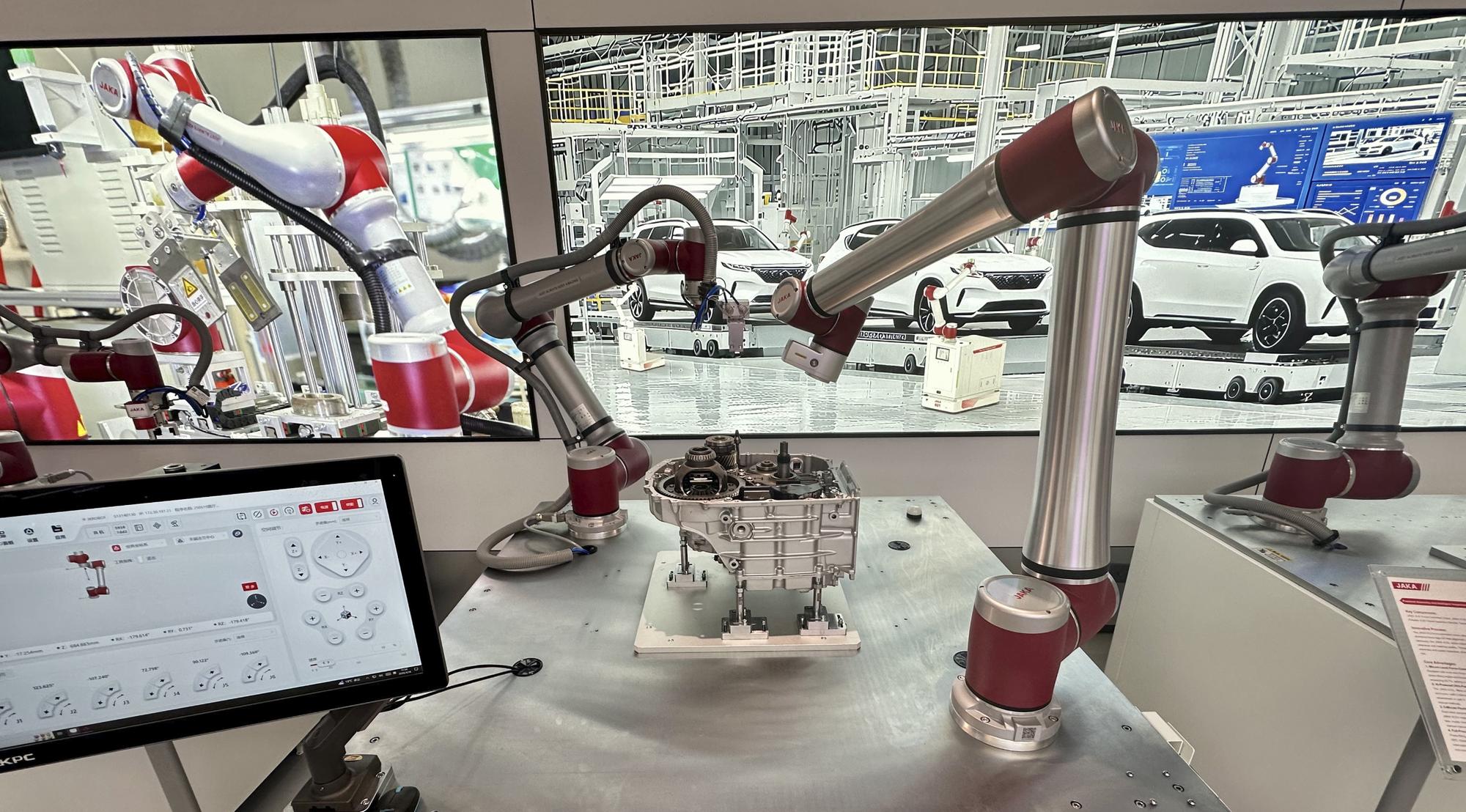
In the automotive seat quality inspection scenario, Jieka and its partners have created an embodied intelligent solution that integrates system platforms, AI algorithms, and intelligent robot terminals, forming a closed-loop capability from decision-making to perception operations. Previously, the manual inspection missed about 5% of defects, requiring line adjustments for type changes; now, the robots can inspect five points in one second and over 100 points in 40 seconds, reducing the miss rate to below 0.1% and allowing for simple parameter adjustments for type changes.
‘In the smart economy, we have not only more efficient equipment but also production units that genuinely possess autonomous judgment and flexible adaptability,’ Chang Li stated, highlighting the core value of general-purpose intelligent robots in empowering industrial upgrades.
Chen Yanjiong offered a broader perspective, noting that most companies are still using AI primarily for efficiency gains, while leading companies are replacing workflows with intelligent agents while simultaneously managing data and accumulating training materials. The actual scenario video data generated in this process will significantly advance the development of multimodal large models in China.
He believes that embodied intelligence and the smart economy complement each other—embodied intelligence is a vital component of the smart economy, and the high-quality data generated during its implementation will enhance large model capabilities, creating a virtuous cycle.
‘What we need to break through now is how to achieve large-scale, low-cost implementation of human-machine co-creation, which requires policies to shift from universal support to precise assistance and for the upstream and downstream of the industry chain to open scenarios and share data,’ Chang Li said.
From traditional manufacturing to intelligent manufacturing, and from single industries to chain collaboration, the smart economy is breaking down industry boundaries. Intelligent terminals, represented by general-purpose intelligent robots, are accelerating the transition of the smart economy from concept to reality. Standing at the new starting point of the 14th Five-Year Plan, China is writing a new chapter in high-quality development.
Comments
Discussion is powered by Giscus (GitHub Discussions). Add
repo,repoID,category, andcategoryIDunder[params.comments.giscus]inhugo.tomlusing the values from the Giscus setup tool.